Factoid:
A study at the ADHD Research Center in the Netherlands, found that 64% of children diagnosed
with ADHD are actually experiencing a hypersensitivity to food.
Make Nutrition a Priority
Unless your child is having an acute situation that demands urgent intervention, please explore safe, natural
approaches that emphasize nutritional factors before you subject your little ones to dangerous, traumatic surgeries,procedures, and toxic drugs.
There are thousands of surgeries performed every year on children who have had recurrent ear infections, for
example; surgeries that frequently could have been prevented by identifying and eliminating offending foods from the child’s diet. Either do some research and experimenting on your own or work with a chiropractor or other holistic practitioner who is knowledgeable about food sensitivities. Also be sure to have your child’s spine checked by a chiropractor, as nerve interference is often at the root of childhood conditions including ear infections and bed wetting.
By now I hope you are convinced that helping your children to eat well is essential, and have a pretty good idea of what to feed them. But I know what many of you are probably thinking at this point—actually getting them to eat better is another story. We’ll address that topic in an upcoming article, Tips for Helping Kids Eat Healthier. So stay tuned!
Wednesday, September 24, 2014


Wednesday, September 3, 2014
Tylenol in Pregnancy: ADHD in Kids

The list of dangers for acetaminophen, the active ingredient in Tylenol, just grew substantially. JAMA Pediatrics recently reported that acetaminophen use by women who are pregnant can double the risk of behavior disorders in their children. This new report adds to the growing list of acetaminophen dangers.
If you visit www.drugs.com and search "Side Effects of Tylenol" you will see 12 pages of side effects ranging from unpleasant digestive issues, mood swings, seizures and dizziness to list a few. The FDA warns that too much acetaminophen can cause liver damage.
Acetaminophen (paracetamol) is the most commonly used medication for pain and fever during pregnancy in many countries. Research data suggest that acetaminophen is a hormone disruptor, and abnormal hormonal exposures in pregnancy may influence fetal brain development. A study of over 64 thousand families in the Danish National Birth Cohort revealed that acetaminophen use during pregnancy is strongly linked to an increase as much as 30% of ADHD cases in children during the first 7 years of life. 37% of children are at greater risk of Hyperkinetic Disorder if exposed to acetaminophen before birth. According to the study, 20 or more weeks of acetaminophen use nearly doubled the risk of Hyperkinetic and Attention Deficit disorders. The study’s authors state "it is possible that acetaminophen may interrupt brain development", and "should no longer be considered a safe drug for use in pregnancy".
Tylenol is not candy and neither is any acetaminophen-filled medication, whether it available over-the-counter or in prescription strength. During pregnancy what a woman puts in her body directly affects her unborn child by becoming the building blocks used to develop the baby’s eyes, ears, lungs, heart, muscles, skin and brain.
Instead of taking drugs, many women are flocking to chiropractors for relief from discomfort and pain associated with pregnancy as well as to keep their pelvis aligned and balanced which supports a healthy delivery. A study published in 2012 by Chiropractic and Manual Studies stated, "All patients found chiropractic treatment to be effective and that it helped relieve them of their lower back pain and associated symptoms. Patients reported that chiropractic treatment had improved their daily living activities and their mobility, while it decreased their overall pain and discomfort."
There are many chiropractic techniques that are gentle on pregnant women and their babies and provide great results. There is even one specialized technique that can assist in turning a breech positioned baby into its normal position. Dr. Larry Webster developed a gentle chiropractic adjusting technique (called the Webster Technique) to restore movement and alignment in the lower spine throughout pregnancy. During his career of working with over 1,000 pregnant moms, Dr. Webster reported that over 90% of the babies optimized their positioning in utero when the mother received this adjustment.
Rather than risk the immediate and long term effects of acetaminophen, contact us and experience how Chiropractic Care can help you enjoy a healthy drug free pregnancy and live the healthy drug free lifestyle you and your family deserve.
References:
JAMA Pediatr. Published online February 24, 2014. doi:10.1001/jamapediatrics.2013.4914
JAMA Pediatr. Published online February 24, 2014. doi:10.1001/jamapediatrics.2013.4914
Chiropractic & Manual Therapies 2012, 20:32 doi:10.1186/2045-709X-20-32 http://www.chiromt.com/content/20/1/32
http://icpa4kids.org/Wellness-Articles/for-many-pregnant-moms-webster-technique-is-the-key-to-a-safer-birth/All-Pages.html
Wednesday, May 21, 2014
The Real Dangers of Soda to You and Your Children
The Real Dangers of Soda to You and Your Children
by Dr. Joseph Mercola and Rachael Droege
How many sodas have you had today? How about your kids? The average American drinks an estimated 56 gallons of soft drinks each year, but before you grab that next can of soda, consider this: one can of soda has about 10 teaspoons of sugar, 150 calories, 30 to 55 mg of caffeine, and is loaded with artificial food colors and sulphites.
This is an alarming amount of sugar, calories and harmful additives in a product that has absolutely no nutritional value. Plus, studies have linked soda to osteoporosis, obesity, tooth decay and heart disease. Despite this, soda accounts for more than one-quarter of all drinks consumed in the United States.
Teenagers and children, who many soft drinks are marketed toward, are among the largest consumers. In the past 10 years, soft drink consumption among children has almost doubled in the United States. Teenage boys now drink, on average, three or more cans of soda per day, and 10 percent drink seven or more cans a day. The average for teenage girls is more than two cans a day, and 10 percent drink more than five cans a day.
While these numbers may sound high, they’re not surprising considering that most school hallways are lined with vending machines that sell, of course, soft drinks. It’s not uncommon for schools to make marketing deals with leading soft drink companies such as Coca-Cola from which they receive commissions—based on a percentage of sales at each school—and sometimes a lump-sum payment.
The revenues are used for various academic and after-school activities, but what activity could be worth devastating the students’ health, which is exactly what consuming all that soda is doing? Getting rid of vending machines in schools— or replacing their contents with pure water and healthy snacks—could make a big difference, as vending machines can increase the consumption of sweetened beverages by up to 50 or more cans of soda per student per year.
Let’s take a look at some of the major components of a can of soda:
- Phosphoric Acid: May interfere with the body’s ability to use calcium, which can lead to osteoporosis or softening of the teeth and bones. Phosphoric acid also neutralizes the hydrochloric acid in your stomach, which can interfere with digestion, making it difficult to utilize nutrients.
- Sugar: Soft drink manufacturers are the largest single user of refined sugar in the United States. It is a proven fact that sugar increases insulin levels, which can lead to high blood pressure, high cholesterol, heart disease, diabetes, weight gain, premature aging and many more negative side effects. Most sodas include over 100 percent of the RDA of sugar.
- Aspartame: This chemical is used as a sugar substitute in diet soda. There are over 92 different health side effects associated with aspartame consumption including brain tumors, birth defects, diabetes, emotional disorders and epilepsy/seizures. Further, when aspartame is stored for long periods of time or kept in warm areas it changes to methanol, an alcohol that converts to formaldehyde and formic acid, which are known carcinogens.
- Caffeine: Caffeinated drinks cause jitters, insomnia, high blood pressure, irregular heartbeat, elevated blood cholesterol levels, vitamin and mineral depletion, breast lumps, birth defects, and perhaps some forms of cancer.
- Tap Water: I recommend that everyone avoid drinking tap water because it can carry any number of chemicals including chlorine, trihalomethanes, lead, cadmium, and various organic pollutants. Tap water is the main ingredient in bottled soft drinks.
- Soda is one of the main reasons, nutritionally speaking, why many people suffer health problems. Aside from the negative effects of the soda itself, drinking a lot of soda is likely to leave you with little appetite for vegetables, protein and other food that your body needs.
If you are still drinking soda, stopping the habit is an easy way to improve your health. Pure water is a much better choice. If you must drink a carbonated beverage, try sparkling mineral water.
About the Author:
© Copyright 2005, Dr. Joseph Mercola. All Rights Reserved. Reprinted with permission. Please visit Dr Mercola’s site for additional information and to subscribe to his free Natural Health Newsletter: www.mercola.com
Soda Causing Nutritional Deficiencies
Children and adolescents who drink soda may be depriving themselves of several important vitamins and minerals, results of a new survey suggest.
The researchers note that soda consumption among children and adolescents rose 41% between 1989–1991 and 1994–1995, mostly displacing milk and juice, the leading sources of many vitamins and minerals in the American diet.
The results are based on data from more than 4,000 children aged 2 to 17 years.
 Among children aged 2 to 5:
- 75% drank milk
- 53% drank juice
- 34% drank soda
In those aged 12 to 17:
- 63% of boys and 49% of girls drank milk
- 34% drank juice
- 68% of boys and 63% of girls drank soda
Soda drinkers were less likely to get the recommended levels of:
- vitamin A
- calcium
- magnesium
Archives of Pediatric and Adolescent Medicine
November, 2000; 154: 1148-1152
November, 2000; 154: 1148-1152
Monday, May 12, 2014
New autism guidelines may reduce diagnoses by nearly one-third
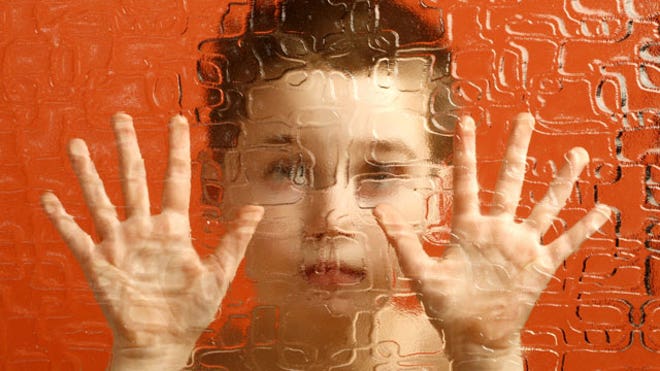
New guidelines for defining autism spectrum disorder (ASD) may reduce the number of people being diagnosed with the condition by nearly one-third.
According to a new study published in the Journal of Autism and Developmental Disorders, researchers from Columbia University have concluded that the updated guidelines, released by the American Psychiatric Association (APA) in 2013, may result in thousands of children with developmental delays no longer qualifying for the social and medical services they need.
The guidelines are listed in the Diagnostic and Statistical Manual of Mental Disorders (DSM), often touted as the psychiatrist’s “bible” for diagnosing mental health disorders. The manual’s previous version, the DSM-IV-TR, listed three distinct subgroups for ASD: autistic disorder (AD), Asperger’s disorder and pervasive development disorder-not otherwise specified (PDD-NOS).
But in the manual’s latest edition, the DSM-5, these subgroups were eliminated and replaced with one broad diagnosis of ASD, which places individuals on a continuum depending on the severity of their symptoms. Additionally, another category called social communication disorder (SCD) was added for people with verbal and nonverbal communication impairments, and the APA noted that many individuals with PDD-NOS might now fall under this category.
After conducting a systematic literature review and meta-analysis of diagnostic rates, researchers found a 31 percent decrease of ASD diagnoses under the new DSM-5 guidelines, compared with cases of ASD identified by the DSM-IV-TR. They also found a decrease in AD diagnoses of 22 percent and a decrease of PDD-NOS by 70 percent. Furthermore, many of the people who failed to meet the criteria for ASD under the DSM-5 failed to qualify for SCD as well.
According to the Centers for Disease Control and Prevention (CDC), 1 in 88 children suffer from ASD – a statistic the researchers think will soon change.
"We are potentially going to lose diagnosis and treatment for some of the most vulnerable kids who have developmental delays," lead author Kristine Kulage, director of the office of scholarship and research development at Columbia Nursing, said in a press release. "In many instances, children require a diagnosis of ASD to receive medical benefits, educational support and social services."
Wednesday, February 19, 2014
Improvement in Quality of Life for Six Pregnant Patients Undergoing Chiropractic Care: The Promise of PROMIS
CASE SERIES
Improvement in Quality of Life for Six Pregnant Patients Undergoing Chiropractic Care: The Promise of PROMIS
Journal of Pediatric, Maternal & Family Health - Chiropractic ~ Volume 2013 ~ Issue 1 ~ Pages 11-14
Abstract
Introduction: The use of health-related quality of life (HRQoL) measures in chiropractic pregnant patients remains virtually non-existent. In this paper pregnant patients are characterized showcasing the use of the NIH PROMIS program to determine baseline HRQoL measures.
Methods: In addition to describing sociodemographic and clinical data, patient-centered outcomes measures utilizing the PROMIS-29 Profile V1.0 are demonstrated.
Results: Six pregnant patients (average age=33.33 years) with average parity at 0.33 and mean gestation of 20 weeks are described. Their primary caregivers were obstetrician/gynecologists, nurse-midwives and midwives. All were aware of concurrent chiropractic care. The patients presented with NMS complaints and for wellness care. The PROMIS scoring demonstrated the dynamic nature of the HRQoL domains in pregnant patients with improvements (i.e., fear/anxiety, pain interference and satisfaction with social roles) and decrements (i.e., physical functioning and sleep disturbance) in HRQoL domains.
Discussion: Evidence-informed practice expects that some aspect of chiropractic patients’ HRQoL measures will have demonstrable improvements. The use of PROMIS within a chiropractic Practice Based Research Network (PBRN) offers promise in this regard.
Conclusion: Pregnant patients attending chiropractic care within a PBRN are characterized using PROMIS HRQoL measures. The use of valid outcome measures to demonstrate chiropractic effectiveness should be further implemented in research and practice.
Keywords: Chiropractic, Practice Based Research Network, pregnancy, Health-related quality of life, PROMIS
Wednesday, February 12, 2014
Allergies less common among kids born outside US
Children who move to the United States have a lower risk of
allergies than kids born in this country, a new study suggests.
In the study, children who immigrated to the United States
were about 44 percent less likely to have an allergy condition — including
asthma, eczema, hay fever or food allergies — compared with kids born in the
country.
The study is published today (April 29) in the journal JAMA Pediatrics.
Children need to "eat dirt" so to speak. We as parents need to expose our children to the environment around us and let the child's God given immune system get a workout. If you wanted to get stronger or run faster you need to exercise, the same is true for the immune system. Give it a workout and make sure it is functioning at its best. How do you know if it is not? Have them checked by a pediatric chiropractor. (That's me, Dr. Maly)
The findings support the " hygiene hypothesis,"
which proposes that exposure to germs or infections during early childhood may
protect against some allergies, the study authors said.
However, the apparent protection from allergies seen in the
study was not permanent. Foreign-born children who lived in the United States
for more than 10 years were about three times more likely to develop an allergy
compared to foreign-born children who lived in the country for two years or
less, the study found.
The findings are in line with what the researchers had
observed anecdotally in their own practice: people who immigrate to the United
States tend to develop allergies at a later age than those who were born here,
said study researcher Dr. Jonathan Silverberg, a dermatologist at St.
Luke's-Roosevelt Hospital Center in New York City.
The new findings suggest that allergies may arise
differently depending on where a person was born, a topic that needs further
study, Silverberg said.
Previous studies had shown that the prevalence of childhood
allergies is higher in the United States than in other countries such as Mexico
and China. However, few studies had examined the risk of allergies among U.S.
immigrants.
The new study was based on information from about 91,800
U.S. children. Parents were asked in a survey in 2007 and 2008 whether a doctor
had ever told them that their child had asthma, eczema, hay fever or food
allergies.
About 34 percent of children born in the United States had
an allergy, compared with about 20 percent of those born outside the country.
The link held true regardless of participants' ethnicity, income level or
whether they lived in an urban or rural area.
Children born outside the United States were 73 percent less
likely to have asthma, 55 percent less likely to have eczema, 66 percent less
likely to have hay fever and 20 percent less likely to have a food allergy
compared with kids born in the United States.
Children who were born in the United States but whose
parents were immigrants also had a reduced risk of allergies.
Foreign-born children who lived in the United States for longer
than 10 years were more likely to have eczema or hay fever than those who lived
in the country for two years or less.
The new study cannot say why children born in the United
States are at greater risk for allergies than those born in other countries.
Silverberg said he suspects that a number of factors,
including climate, diet and obesity, play a role in triggering allergies.
By Rachael Rettner, MyHealthNewsDaily
Wednesday, February 5, 2014
Carry on: Study finds it's good to hold your baby
When mothers in the study carried their babies while walking around, the infants became noticeably more relaxed and stopped crying and squirming. The babies' rapidly beating hearts also slowed down, evidence that the children were feeling calmer.A new study from Japan confirms what many mothers may know instinctively: Picking up and carrying a fussy baby usually calms down and relaxes the child, making the move a good one for both moms and infants.
"Infants become calm and relaxed when they are carried by their mother," said study researcher Dr. Kumi Kuroda, who investigates social behavior at the RIKEN Brain Science Institute in Saitama, Japan. The study observed strikingly similar responses in mouse babies.
Since carrying (meaning holding while walking) can help stop an infant from crying, Kuroda said, it can offer mothers a way to soothe short-term irritations to their children, such as scary noises or vaccinations.

Getty Images stock
A new study confirms: Hold that baby as much as you want!
The findings were published online today (April 18) in the journal Current Biology.
A strong calming effect For the small study, researchers monitored the responses of 12 healthy infants ages 1 month to 6 months. The scientists wanted to discover the most effective way for mothers to calm a crying baby over a 30-second period — simply holding the baby or carrying the infant while walking.
Young babies carried by a walking mother were the most relaxed and soothed, compared with infants whose mothers sat in a chair and held them, the study found. As a mother stood up and started to walk with her child cradled close in her arms, scientists observed an automatic change in the baby's behavior.
These results held even after the researchers took into account other factors, such as the child's age and sex, and the mother's age and walking speed.
Kuroda said she was surprised by the strength of the calming effect from maternal holding and walking. In observing experiments on both humans and mice, she was amazed at how quickly the heart rate slowed, and by how much immediately after a mother started walking. (Mother mice pick up their young by the scruff of their neck with their mouths.)
According to the researchers, maternal walking may be more effective in calming infants than other kinds of rhythmic motion, such as rocking.
Advice for parents When an underlying reason for crying persists, such as hunger or sustained pain, the infant may start crying again soon after the end of carrying.
That's why Kuroda recommended that when a baby starts crying, a brief period of carrying may help parents to identify the cause of the tears. She acknowledged carrying might not completely stop the crying, but it may prevent parents from becoming frustrated by a crying infant.
The findings also have implications for one parenting technique in which parents let babies cry as a way to help them learn to fall asleep by themselves, the researchers said.
"Our study suggests why some babies do not respond well to the 'cry-it-out' parenting method," Kuroda said.
Proponents of the technique advise parents to let infants, after a certain age, cry themselves to sleep — without mom or dad comforting them — in the hopes the baby will learn how to soothe himself or herself.
But Kuroda said that calming by maternal carrying, as well as crying during separation, are both built-in mechanisms for infant survival. These behaviors have been hard-wired for millions of years. "Changing these reactions would be possible as infants are flexible, but it may take time," she said.
Although this study looked at a baby's behavior in response to its mother, Kuroda said the effect is not specific to moms, and any primary caregiver for the infant can perform the carrying. The researchers observed the same carrying-induced calming effects when fathers, grandmothers and an unfamiliar female with caregiving experience carried babies who were under 2 months old, Kuroda said.
Cari Nierenberg
Subscribe to:
Posts (Atom)